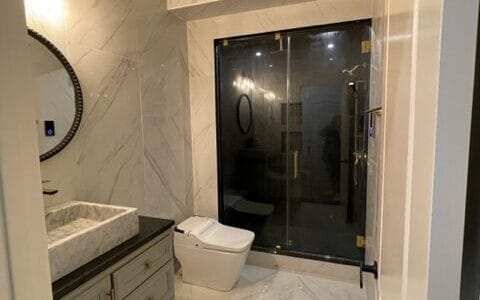
Bathroom design has moved a long way from the purely utilitarian. The rooms we are asked for now are calmer, better lit and considerably more comfortable. The trick is choosing elements that will still look deliberate in five or ten years.
Get the layout right first
No finish rescues a bad layout. Before choosing tile, work out where the door swings, whether the vanity blocks anything, and whether the shower is genuinely big enough to use comfortably. Removing an underused tub often frees enough space for a walk-in shower without touching a single wall.
Light in layers
One central fixture flattens a room and casts shadows exactly where you do not want them. Task lighting at the mirror, general lighting overhead, and something soft at low level makes a bathroom far more pleasant to use at either end of the day.
Large format tile
Fewer grout lines means a calmer room and considerably less cleaning. It also makes a small bathroom read as larger, provided the layout is set out so cuts fall where they are least visible.
Choose the timeless thing for the expensive parts
Tile, sanitaryware and the shower enclosure are difficult and costly to change. Keep those relatively restrained. Paint, mirrors, hardware and textiles are cheap to change, so that is where a stronger colour or a bolder choice belongs.
Ventilation is not optional
The best-looking bathroom in the world will develop problems without extraction that actually moves air outside. It is the least glamorous line on the quote and one of the most important.